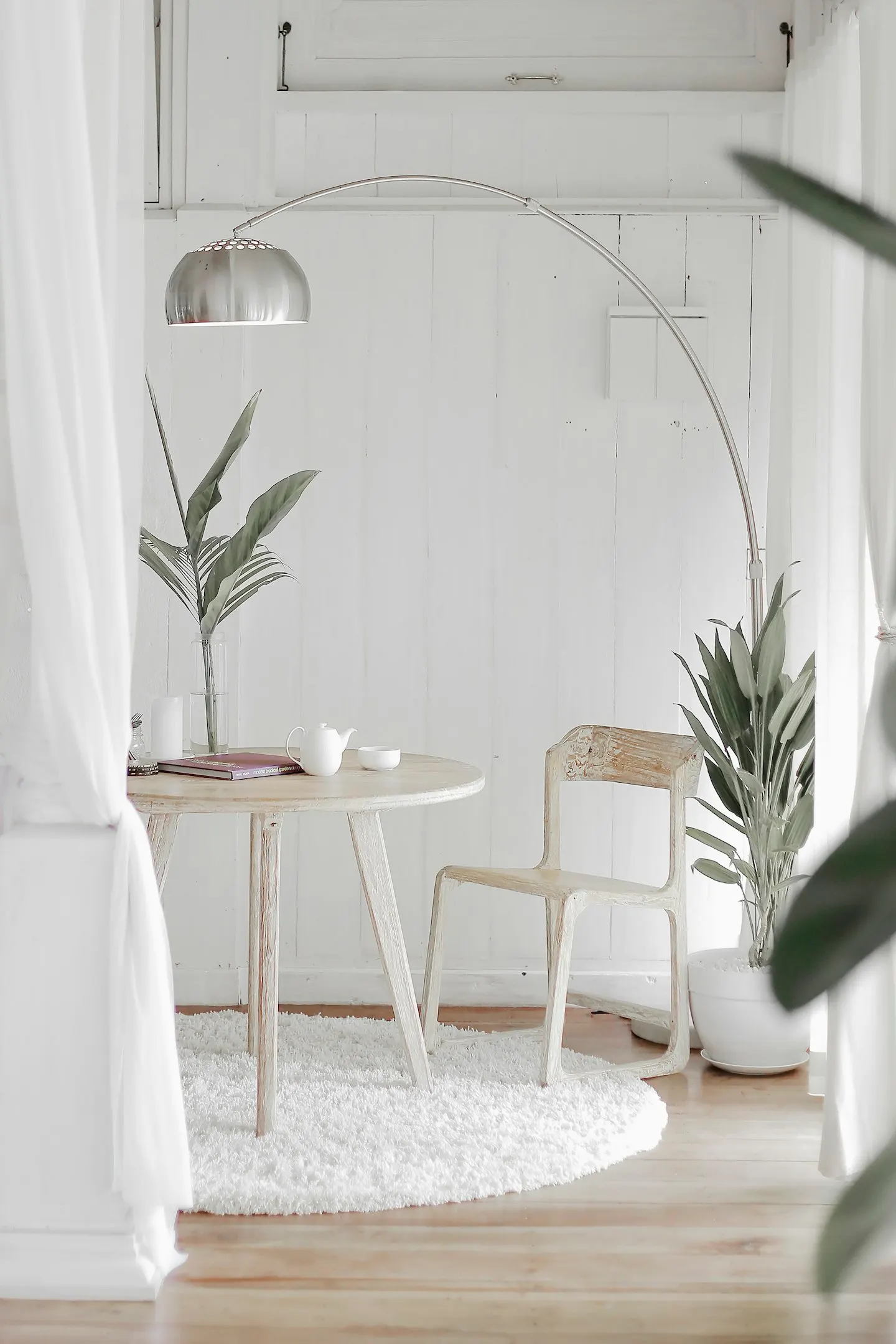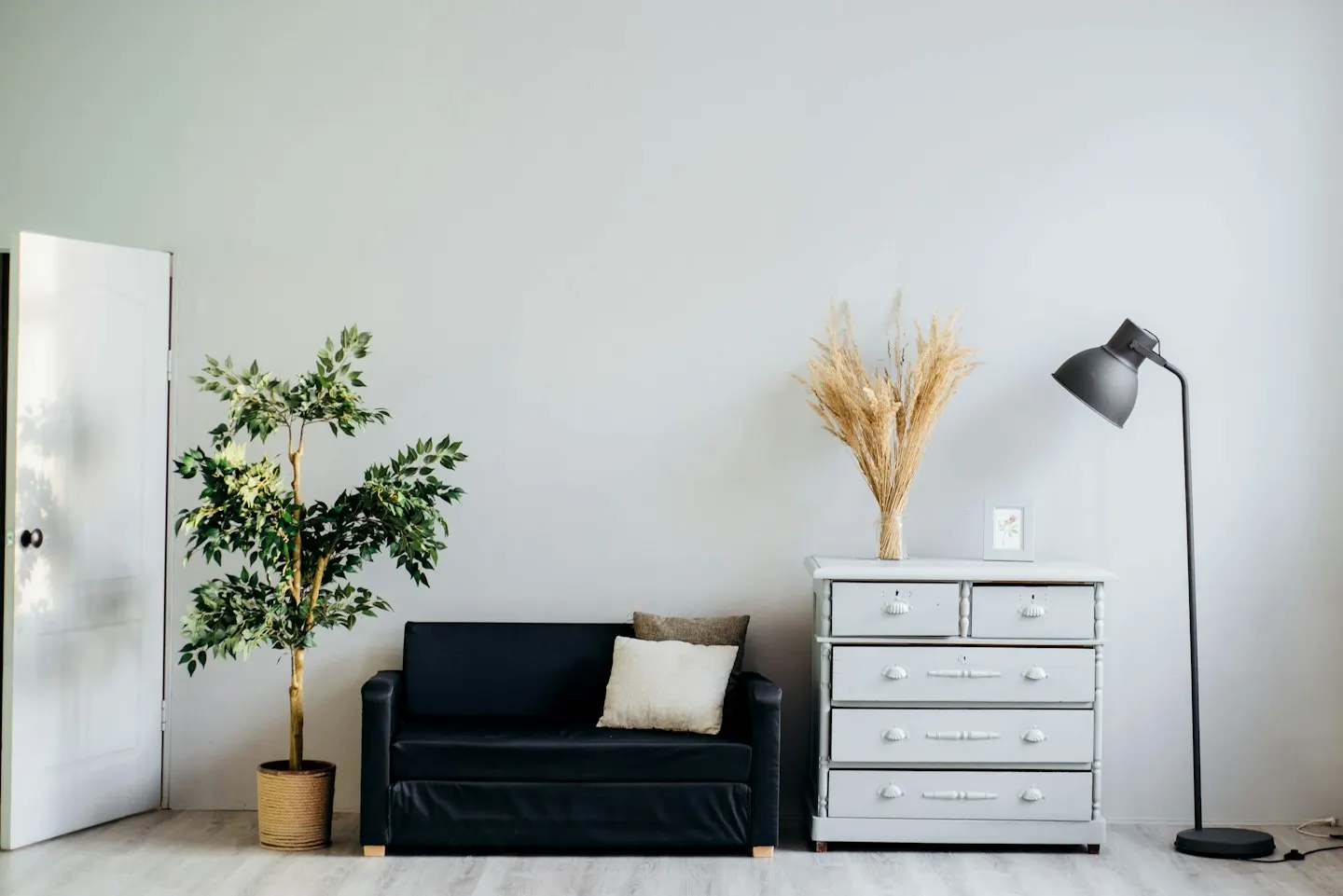
This guide uses stock photographs for illustration. It is general planning guidance, not a record of a tested personal project. How these guides are made.
In this article6 sections · Jump to an idea
4 min read
Spring is the one season you decorate by removing rather than adding. Take out the heavy throws, the dark cushion covers, the layered rugs and half the surface objects. Most rooms are finished at that point.
This is why spring decorating so often disappoints. People approach it the way they approach autumn, by bringing things in, and end up with winter plus daffodils. The season registers through lightness and space, which are things you uncover rather than buy.
Stage one: take things out
Work one room at a time and be more ruthless than feels comfortable.
The textiles go first. Wool throws, heavy knit cushion covers, the sheepskin layered over the rug, flannel bedding. Wash them, fold them flat, and put them away properly rather than draping them over a chair in the spare room.
Cut the surface objects by half. Winter styling accumulates: candles, dried material, small ornaments, the bowl of pine cones from December. Spring wants bare surface. A side table with one object on it reads as the season more clearly than the same table with five lighter objects.
Take out one rug if two are layered. The smaller one goes. Bare floor around the edges of a room is a spring signal in itself.
Pull the furniture back if you moved it in. Winter arrangements tend to close in around a heat source. Opening the circulation back up changes how the room feels before anything decorative happens.
Stage two, a fortnight later: add three things
Leave a gap between the stages. A house stripped and immediately re-dressed never gets the benefit of the emptiness, and in early February the stripped version is genuinely nicer than the alternative.
Branches, not cut flowers. This is the single best thing about decorating in spring. Forsythia, cherry, pussy willow, hazel and quince all force indoors: cut them while the buds are still tight, crush the bottom 5cm of each stem, and stand them in deep water somewhere cool and bright.
They open over one to three weeks depending on how early you cut, and they last far longer than any bought bouquet. A jug of branches is also the cheapest height in decorating — usually free, if there is a hedge involved.
One green plant in the room you use most. Not a shelf of them. One, large enough to read from the doorway.
A lighter textile, in one place only. A linen or cotton throw over the arm of the sofa. That is the whole textile pass.
The light, which does most of the work
Two unglamorous jobs change a house in spring more than anything you can place on a surface.
Wash the windows, inside and out. A winter’s worth of grime cuts noticeably more light than people assume, and the difference on a bright day is obvious immediately.
Change the bulb colour back. If you dropped to 2200K for winter, move to 2700K or a little above now. The very warm bulbs that make a room feel like a refuge in December make it feel stuffy and underlit in April.
Take down the heaviest curtain layer. If a thermal or blackout layer went up in November, removing it widens the window visually and lets the first proper light in.
Move a mirror if one is badly placed. A mirror opposite a window doubles the useful light in a room. The positioning logic is set out in more detail in the entry table guide, where what a mirror reflects matters more than the mirror itself.
A palette note
Spring colour tends to go wrong in one of two ways: either nothing changes at all, or the room fills with pastel.
The useful range is clear and slightly cool rather than sweet: bone, chalk, pale grey-green, soft clay, and one real colour used sparingly. Yellow works in small amounts and overwhelms in large ones.
Keep the brown palette of autumn out of it entirely. The ochres and rusts that do so much in October are exactly what makes a room feel like it has not moved on, and the discipline of three tones from the mantel guide applies just as strictly here, with a different set of three.
Room by room, briefly
Living room. Textiles out, one vase of branches, one plant, windows washed. Nothing else is necessary.
Kitchen. Clear glass back on the open shelves, the darkest crockery put away, herbs on the sill. The seasonal swap on shelving is covered in the open shelving guide.
Bedroom. The weight change here is the most noticeable in the house. Lighter duvet, cotton rather than flannel, one fewer pillow.
Entrance. The surface that collected gloves and scarves all winter gets emptied. A small jug of branches by the door does the rest.
Outside. A balcony or step comes back into use earlier than people expect, and bulbs planted in autumn arrive before anything else has leaves — the four-season version is in the balcony guide.
What to avoid
- Pastel sets. A matching bundle of pale accessories reads as a kit rather than a change of season.
- Artificial blossom. The one artificial flower that never convinces, because real blossom is defined by being brief.
- Scent that works against the season. Vanilla and spice belong to winter. If you use anything, keep it green or citrus and keep it to one source.
- Decorating too early. Stripping a room in January leaves eight cold weeks with nothing to sit in. Early February is soon enough in most climates.
Still wondering
Common questions
How do I decorate for spring?
Mostly by taking things away. Remove the heavy throws, dark cushion covers, layered rugs and half the surface objects. Most rooms are finished at that point, and adding before subtracting gives you winter plus daffodils.
What lasts longer than cut flowers in spring?
Branches. Forsythia, cherry, pussy willow, hazel and quince all force indoors. Cut them while the buds are still tight, crush the bottom 5cm of each stem, and stand them in deep water somewhere cool and bright.
When should spring decorating start?
Early February in most climates. Stripping a room in January leaves eight cold weeks with nothing comfortable to sit in, and the season registers through light and space rather than through objects.
Save it
Pin this for your board
Tap the image to save it to Pinterest and come back to it when you are ready to start.