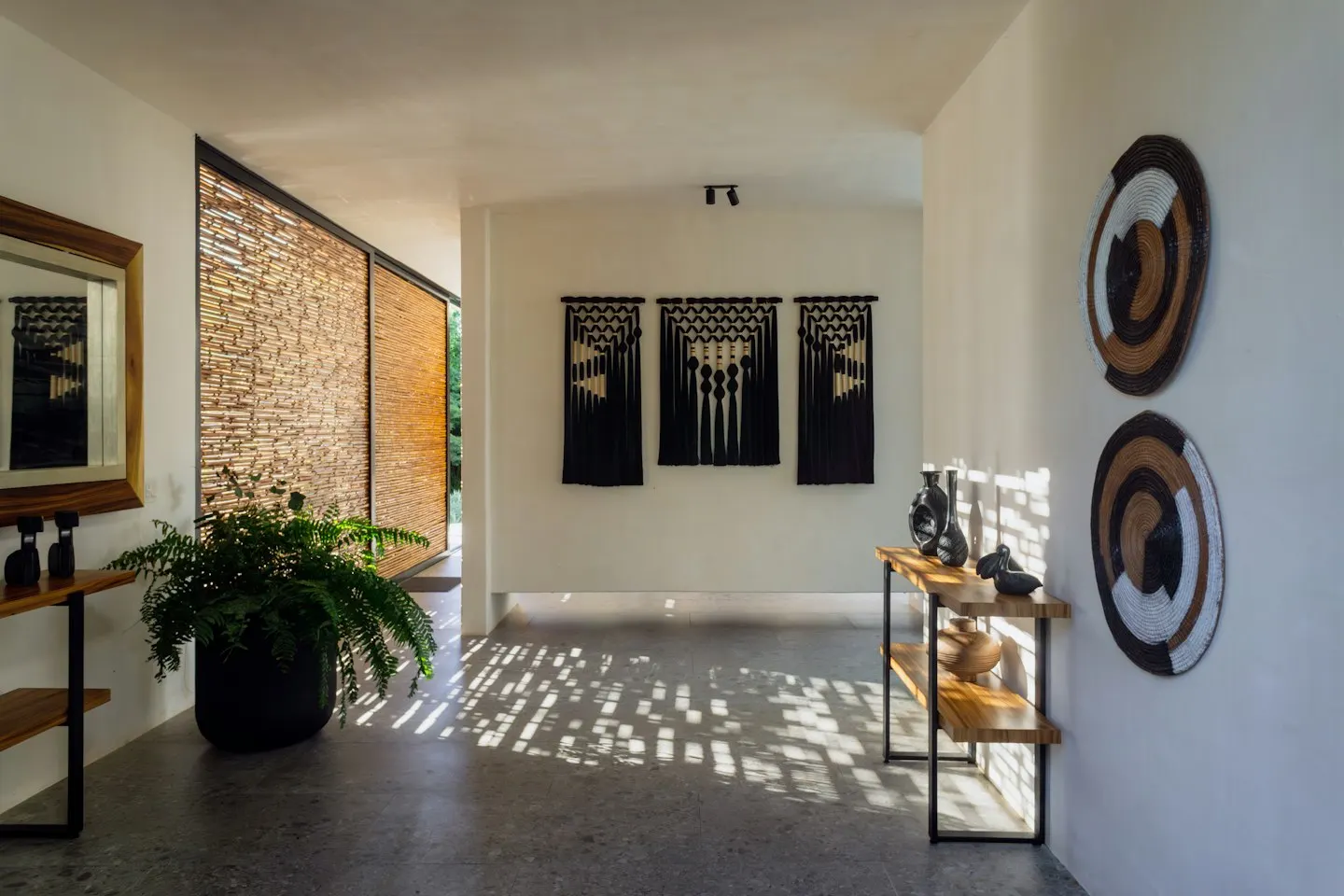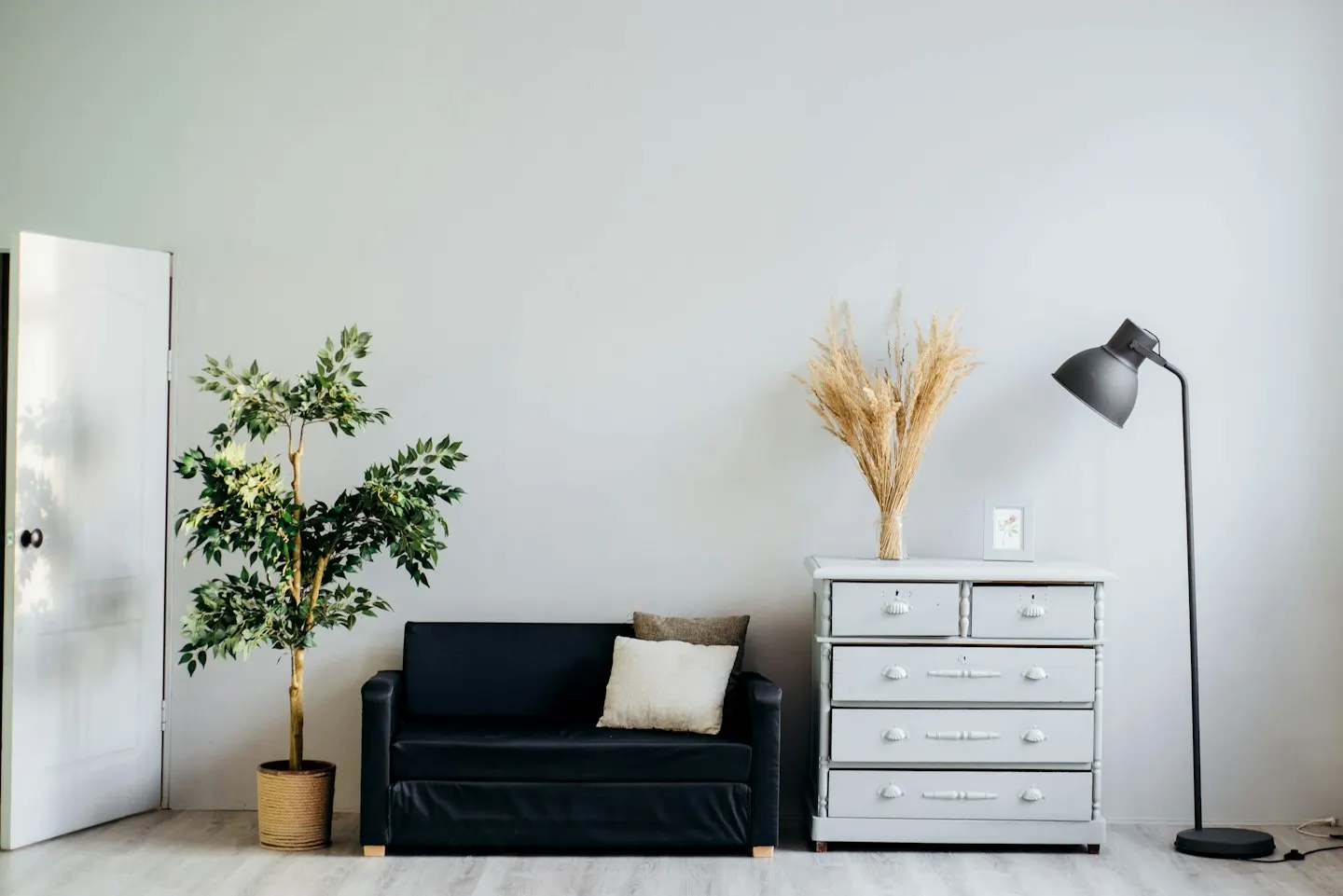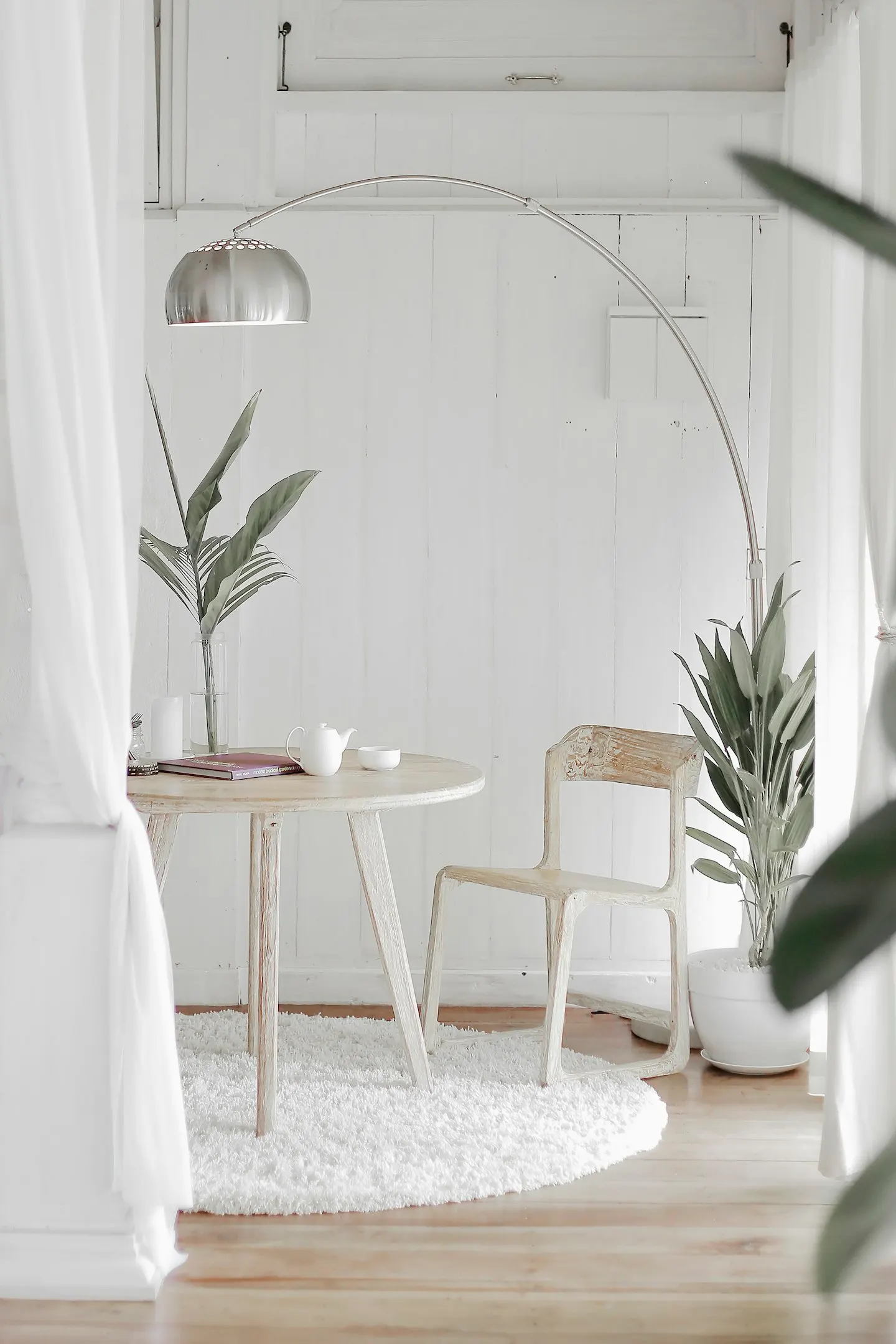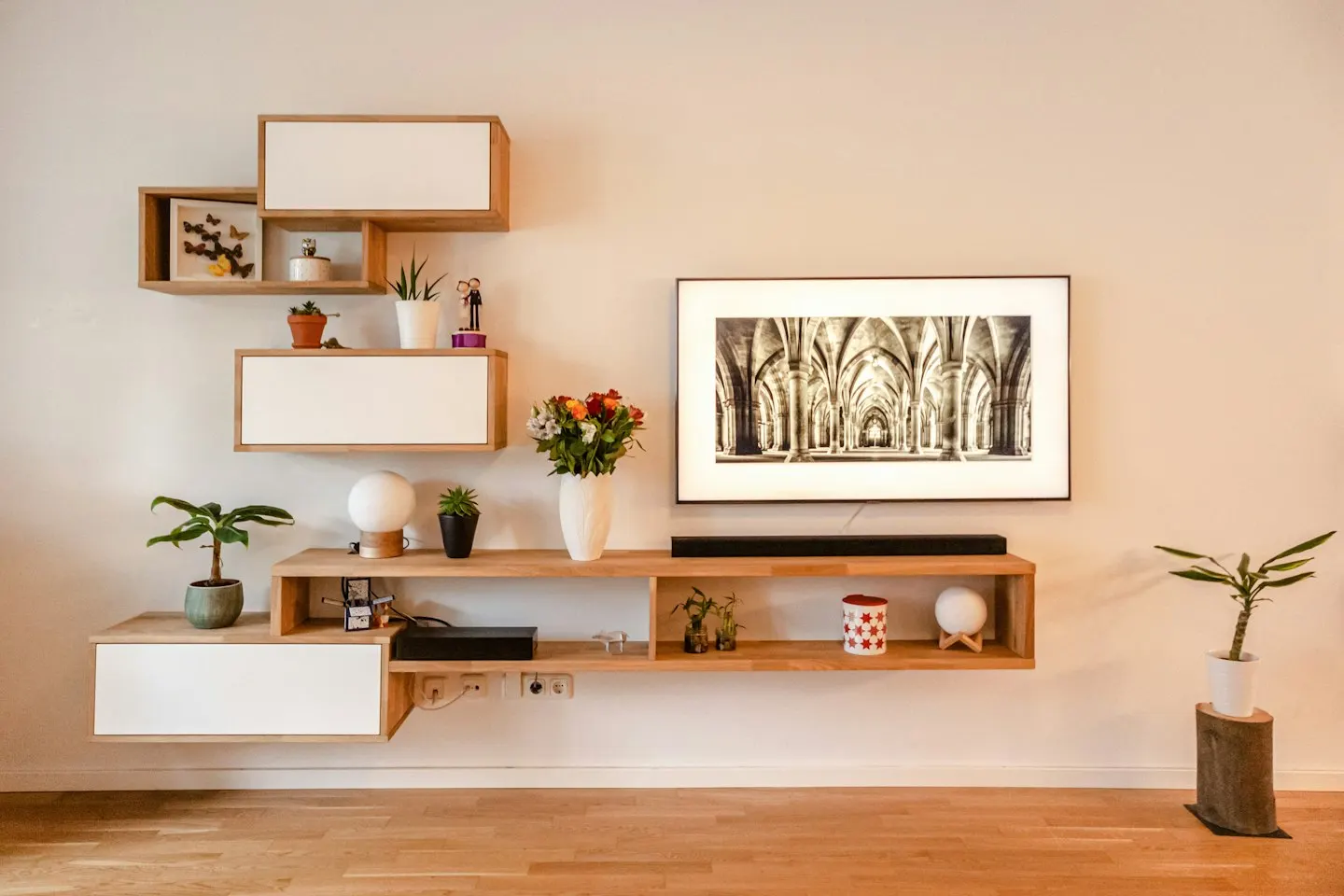
This guide uses stock photographs for illustration. It is general planning guidance, not a record of a tested personal project. How these guides are made.
In this article6 sections · Jump to an idea
4 min read
Give a third of the table to keys and post and never put anything decorative on it. Style the rest with one tall object, one low object and one container. That is the formula, and the landing zone is the part that makes it survive a Tuesday.
Entry tables fail in a specific way. They get styled beautifully, then within a week they are invisible under post, keys, sunglasses and a parcel nobody has opened. The answer is not more discipline from the household. It is designing the drop-off into the arrangement from the start.
Start with the landing zone
Decide which third of the surface is for real life. Usually it is the end nearest the door, because that is where a hand naturally goes while the other one is still holding something.
Put a shallow dish or a small tray there and nothing else. The tray is doing a specific job: it gives keys a defined edge, so they stop spreading. Without it, keys expand to fill whatever surface is available.
Everything in the rest of this article happens on the other two-thirds.
One tall, one low, one container
The arrangement is three pieces and it works on a table of almost any width.
The tall thing sits at the back, towards one end — a lamp if there is a socket, otherwise a vase of branches, a stack of books with something on top, or a framed picture propped rather than hung. Aim for something noticeably taller than it is wide, which is what stops a narrow hall table reading as a shelf.
The low thing sits in front and slightly to one side: a shallow bowl, a short candle, a small box, a stone. It should overlap the base of the tall thing when seen from the doorway. Overlap is what gives the group depth instead of a row.
The container is the practical one — the tray in the landing zone, or a basket underneath for gloves, dog leads and the shoes that accumulate regardless.
If the table looks unfinished, the usual cause is that all three objects are roughly the same height. Make the tall one twice the height of the low one and the problem disappears.
The mirror, and what it is actually reflecting
Most entry tables want a mirror above them, but the common mistake is hanging it for the table rather than for what it reflects.
Stand where you come in and look at the wall opposite. Whatever is there is what the mirror will show you every time you walk through the door. If that is a window or a lit lamp, hang the mirror to catch it. If it is a cluttered coat hook, move the mirror or move the hooks.
Practical numbers: hang it so the bottom edge sits roughly 15 to 20cm above the table, and keep the mirror narrower than the table itself. A mirror wider than the furniture beneath it makes the table look like it has shrunk.
Winter is where entry tables get ruined
This is the part worth planning for, because the entrance takes the worst of the season.
Everything arrives wet. A wooden top that looked fine in September will have white water marks by January. Put down a metal, stone or lacquered tray for wet items, and accept that it will look slightly utilitarian. That is the correct trade.
Light fails here first. A hallway with no window is dark from mid-afternoon. A small lamp on the table, left on, does more for how the house feels on arrival than any decorative object on this list. Use a warm bulb — 2700K or below.
Seasonal restraint. Change two things, not the whole surface: swap the low object for something seasonal, and add one short stem of greenery. A full display on an entry table gets knocked over by the first person carrying shopping. The same damage-free thinking applies to the door itself, where nothing should rely on an adhesive that outlasts the season.
One garland, if you want one. Along the front edge of the table rather than draped over the mirror, so it stays clear of hands and sleeves.
What to keep off the surface entirely
- Anything precious. This is the highest-traffic horizontal surface in the house.
- Tall candles. Coats brush past them, and the drip ends up on the floor.
- A second tray. Two trays stop reading as a landing zone and start reading as storage.
- Trailing plants, which get caught on bags on the way past.
- Framed photographs, which end up face-down within a fortnight.
If there is no room for a table
Plenty of hallways cannot take one. A narrow shelf at roughly 75 to 80cm from the floor does the same job in about 12cm of depth, with hooks beneath it and a basket on the floor below.
The formula does not change: a landing zone at one end, one tall object, one low object. The constraint is only depth, and depth was never what made the arrangement work. For the broader approach to styling a surface against a wall, the three-height method used on a mantel transfers directly, and the seasonal swap used on open shelves is the same discipline applied to a kitchen.
Still wondering
Common questions
How do I stop the hall table filling with clutter?
Give a third of the surface to keys and post and never put anything decorative on it. A shallow tray there gives keys a defined edge so they stop spreading. Style only the remaining two-thirds.
How high should a mirror hang above an entry table?
With its bottom edge roughly 15 to 20cm above the surface, and narrower than the table itself. A mirror wider than the furniture beneath it makes the table look as though it has shrunk.
What if there is no room for a hall table?
A narrow shelf at about 75 to 80cm from the floor does the same job in around 12cm of depth, with hooks beneath it and a basket below. The formula does not change; only the depth does.
Save it
Pin this for your board
Tap the image to save it to Pinterest and come back to it when you are ready to start.