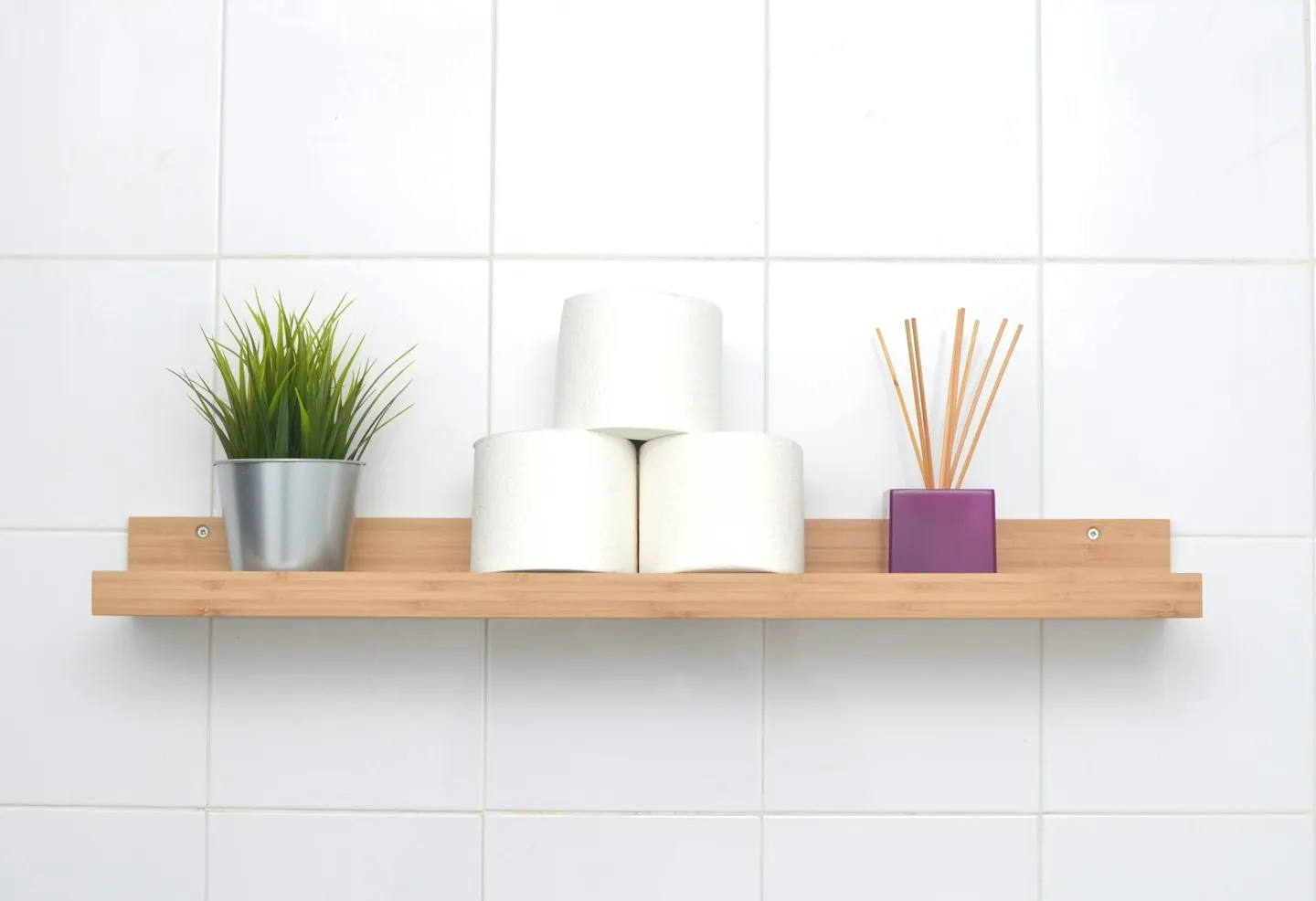
This guide uses stock photographs for illustration. It is general planning guidance, not a record of a tested personal project. How these guides are made.
In this article7 sections · Jump to an idea
5 min read
Put the things you touch every day on the lowest shelf, the things that match each other in the middle, and the tall light things you rarely reach for on top. Leave roughly a quarter of every shelf empty. That is the arrangement, and unlike most of them it survives being used.
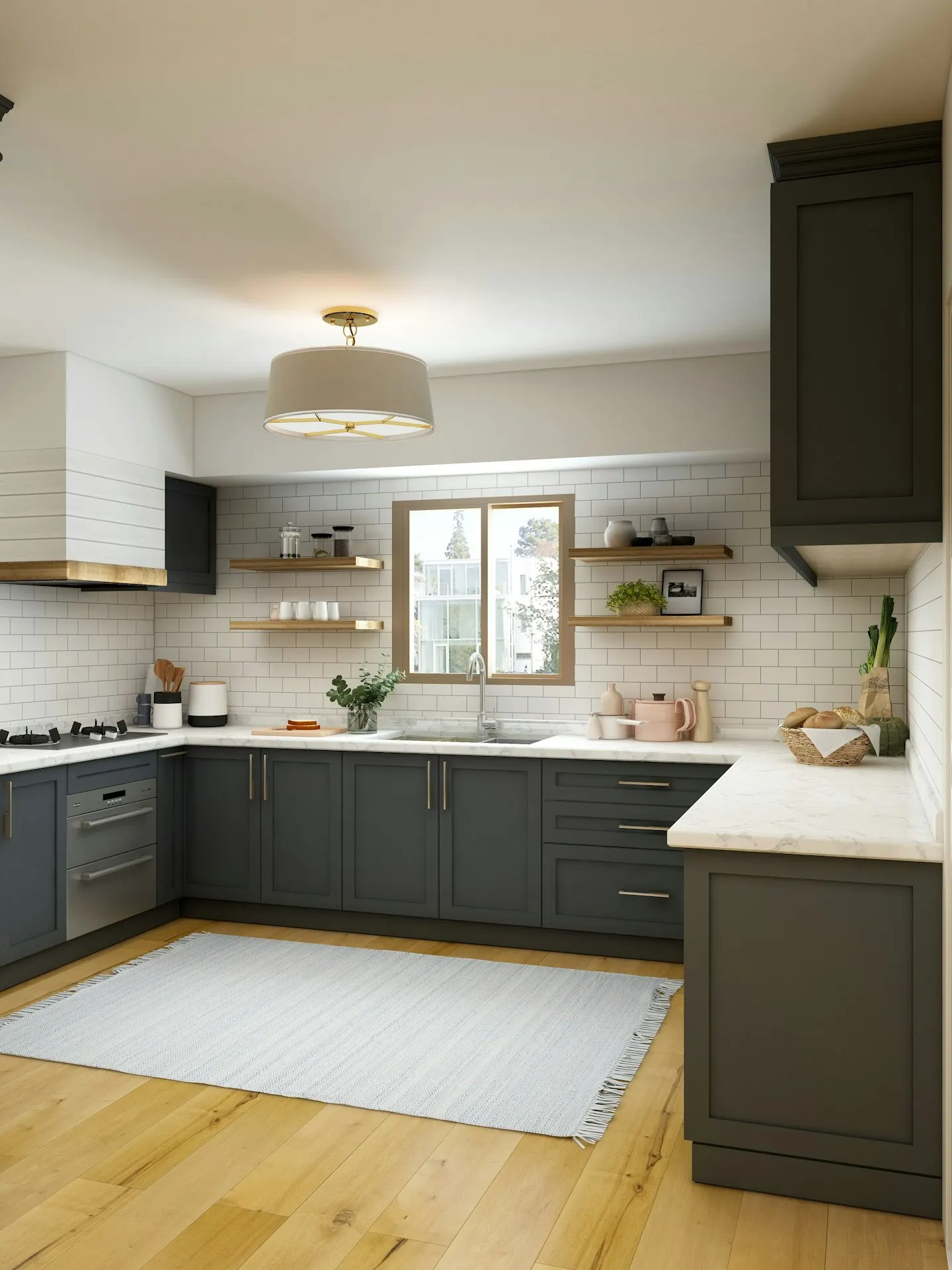
Open shelves fail for one reason: they get treated as display when they are really storage you can see. Let daily use set the layout, then style around it.
Shelf by shelf, from the bottom up
The lowest shelf is for your hands, not your eyes. Everyday mugs, the bowls you actually eat from, the two plates in constant rotation. It should look slightly depleted by Wednesday. If this shelf stays perfect all week, the wrong things are on it and you are quietly using a cupboard instead.
The middle shelf carries the matching sets. Stacks of one plate, a row of one glass, three jars of the same shape. Repetition at eye level is what makes a wall of open shelving read as deliberate rather than accumulated. Stack plates no more than six high; above that the pile looks precarious and people stop taking from it.
The top shelf is for height and air. A tall jug, a board stood on its edge, something trailing. Keep it light — anything you have to stretch and grip is a thing you will eventually drop. This is also the one shelf that can be mostly empty without the wall looking unfinished.
The quarter rule
Measure the shelf and leave about a quarter of its length clear, in one continuous stretch rather than scattered as small gaps. A 90cm shelf wants roughly 22cm of empty run.
Gaps spread evenly between objects read as spacing mistakes. One deliberate empty stretch reads as a decision. Put it at the end furthest from the door, so the arranged part is what you see on walking in.
Three materials, three colours, and no more
Count what is on the wall now. Shelves that feel chaotic usually have six or seven materials competing: glass, two woods, steel, ceramic, enamel, cane.
Pick three and be strict about it:
- One wood — the boards themselves, plus any bowls and boards in the same tone
- One ceramic — a single glaze family, not a survey of everything you own
- One metal or glass — clear glass is the most forgiving, because it mostly disappears
Colour works the same way: a base, a wood tone, and one accent you genuinely like. Everything failing those three goes in a cupboard. This is less about taste than about giving the eye fewer things to resolve at once.
Grease, weight, and the two practical limits
Two things decide whether open shelves stay pleasant to live with.
Distance from the hob. Anything within about a metre of a gas or induction hob collects a film of cooking grease that turns to sticky dust. Keep porous wood and cane out of that zone; glazed ceramic and glass belong there instead, because they wipe clean in one pass.
What the fixings are rated for. Stacked stoneware is heavier than people expect — a dozen dinner plates can pass 6kg on its own. Fix into studs where you can, use fixings rated well beyond what you plan to stack, and read the rating for your actual wall type rather than the packaging’s best case. Plasterboard with nothing behind it is the usual reason one end of a shelf drops.
If you dust only one shelf, make it the top one. Nobody touches it, so it is the only shelf that visibly collects anything.
The seasonal swap: three things, not thirty
This is where shelves earn their keep. Do not redress the wall when the season turns — change three things and leave the working layout alone.
Autumn. Swap clear glass on the middle shelf for amber or smoked, stand a small wooden board on top, and put something seasonal and edible in plain view: quinces, a bowl of walnuts, a squat pumpkin on a plate so it cannot weep onto the wood.
Winter. One string of warm-white lights tucked behind the middle shelf rather than draped across the front, darker plates brought forward, a jug of evergreen offcuts on top. Keep lights off the lowest shelf, where sleeves catch them.
Spring. Bring the clear glass back, cut the heaviest wood, add one jar of branches. Forced blossom on the top shelf does more than a dozen small ornaments, and the same thinking carries through the rest of the house in our spring decorating guide.
Summer. Strip rather than add. Fewer objects, more empty shelf, nothing dark.
Three swaps take ten minutes, and the shelves still work as storage on the way through. The same restraint applies to a mantel, where the method is three clearly different heights and a tight palette, and to a table, where one bowl can carry the whole season.
If it still looks wrong
Work through these in order. The first one solves it more often than the rest combined.
- Take a third of it off. Not rearrange — remove. Most shelves are simply over-filled.
- Group by colour instead of by type. Like tones together quietens the wall immediately.
- Stand one thing on its edge. A board or tray on edge breaks a wall of round objects.
- Look at what is behind it. Busy tile or a dark grout line is often the real problem, and rearranging in front of it will not help.
- Photograph it on your phone. A flat image shows the imbalance your eye corrects for in the room.
When open shelving is the wrong answer
Worth saying plainly: skip it if you cook with a lot of oil at high heat and resent cleaning, if your crockery is a mixed inheritance you are not ready to pare down, or if the only free wall is the one beside the hob. Closed cupboards are not a failure of nerve. They are the right answer in a kitchen that works hard.
One shelf above a worktop, holding the six things you use daily, gets most of the benefit for a fraction of the upkeep.
Still wondering
Common questions
What should go on each open shelf?
Everyday cups and bowls on the lowest shelf, matching sets at eye level, and tall light things on top. Leave about a quarter of each shelf empty in one continuous stretch rather than as scattered gaps.
Do open shelves get greasy near the hob?
Within about a metre of one, yes. Cooking grease turns to a sticky dust on porous surfaces, so keep wood and cane out of that zone and put glazed ceramic or glass there instead, which wipes clean in one pass.
How much weight can an open shelf hold?
More than people allow for: a dozen dinner plates can pass 6kg on their own. Fix into studs where you can, and use fixings rated well beyond what you plan to stack, for your actual wall type rather than the best case.
Save it
Pin this for your board
Tap the image to save it to Pinterest and come back to it when you are ready to start.