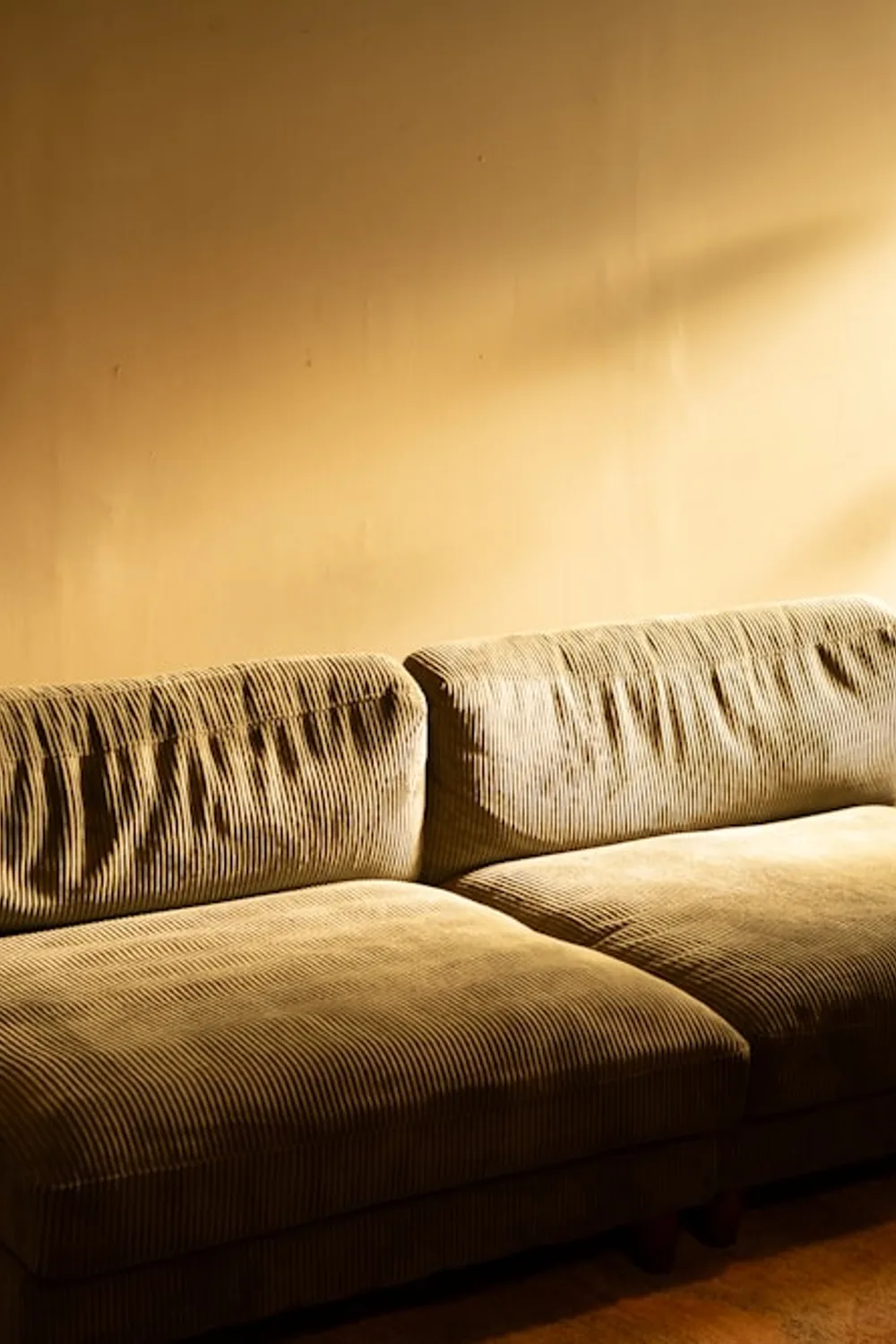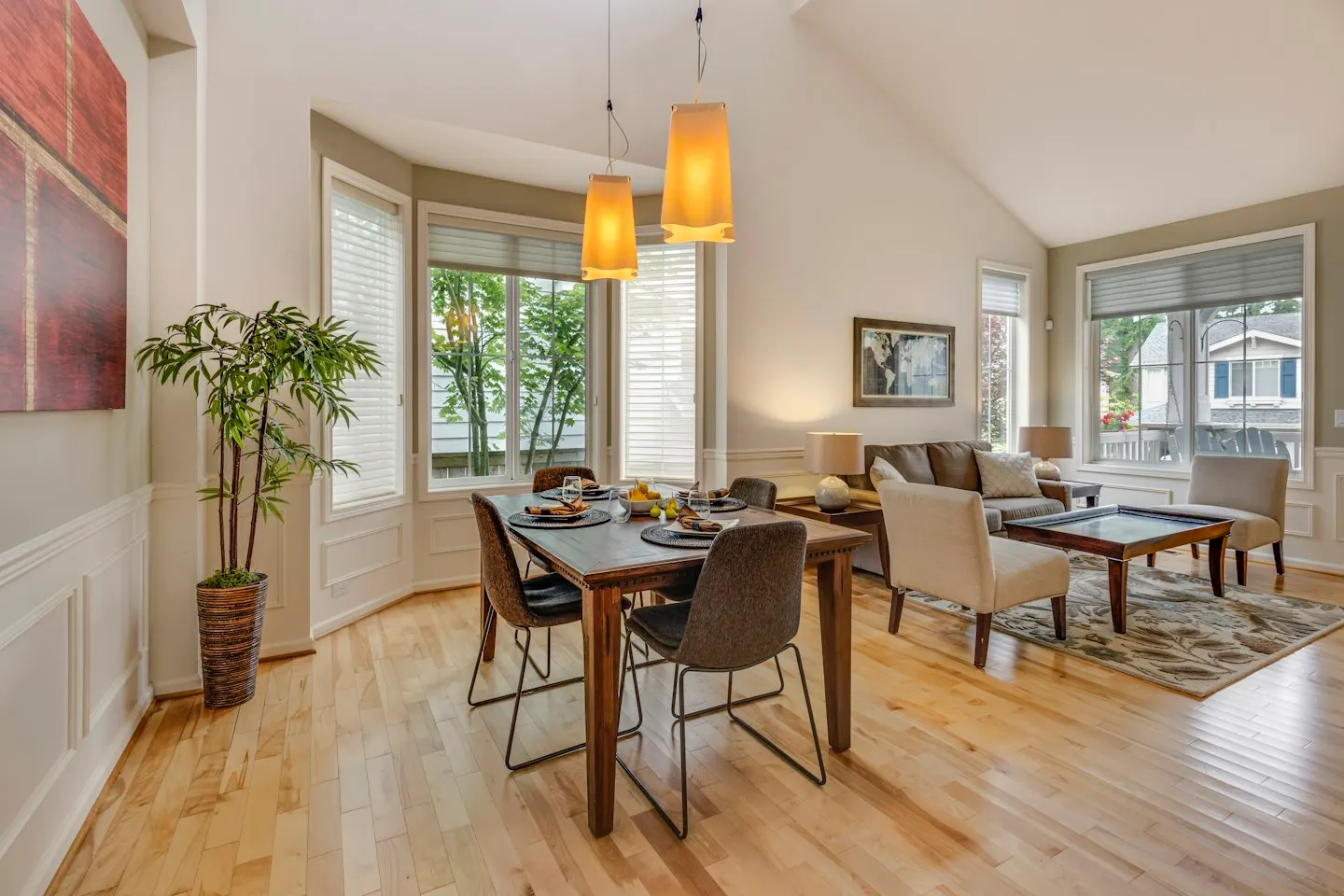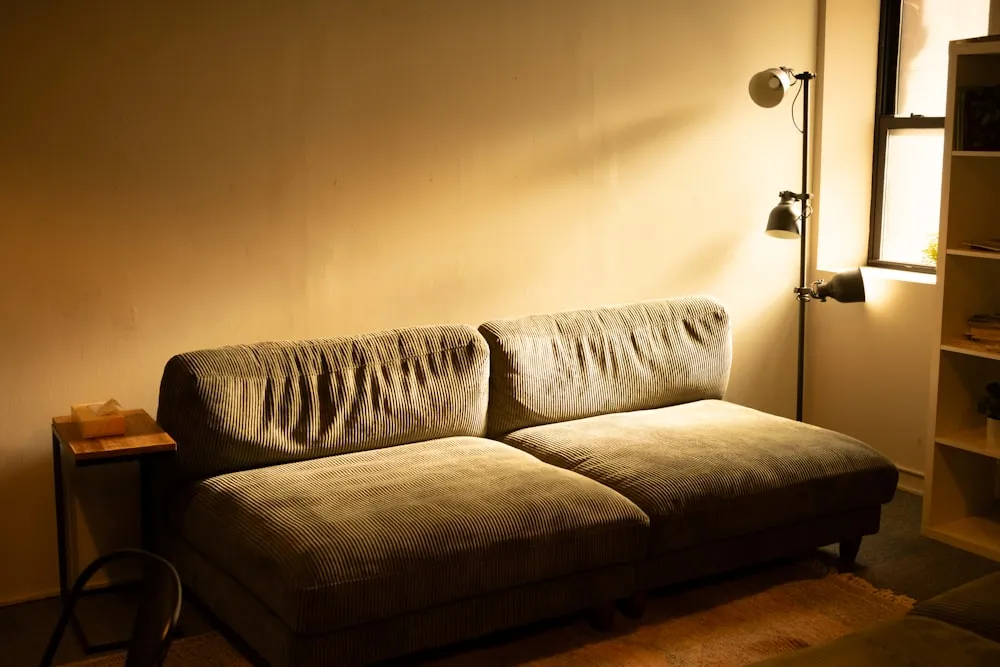
This guide uses stock photographs for illustration. It is general planning guidance, not a record of a tested personal project. How these guides are made.
In this article7 sections · Jump to an idea
4 min read
Do it in four passes, in this order: textiles, light, surfaces, scent. Most living rooms are finished after the third, and the ones that end up looking overdone are the ones where somebody started with the ornaments.
Autumn in a room is a matter of weight and warmth rather than decoration. A heavier fabric and a lower lamp read as the season from the doorway. A bowl of small gourds on the coffee table, on its own, does almost nothing.
Pass one: textiles, and weight above all
This pass does the work. It is worth spending a whole evening on before touching anything else.
Change the weight, not just the colour. A linen throw swapped for a wool one alters a room more than any colour decision. Look for texture visible at arm’s length: a loose basketweave, a waffle, a chunky knit, a bouclé. Flat smooth fabric reflects light evenly and reads as summer whatever shade it happens to be.
Cushions: covers only. Buy covers and keep the inserts you own. Four covers cost a fraction of four cushions and store flat in a drawer for eleven months of the year. The useful sizes are 45cm and 50cm square, plus one lumbar at roughly 30 × 50cm to break the row.
Let one cushion disagree. Match three and let the fourth differ — in texture rather than colour. A single corduroy or sheepskin among three woven covers stops the sofa looking like a showroom bed.
Rugs. If a flatweave is already down, laying a smaller wool or sheepskin rug across one corner is the cheapest visible change in the room. It does not need centring, and it should not repeat the shape of the rug beneath it.
Pass two: light, which matters more than anything else here
One bright ceiling light makes a room feel like a waiting area in October. The correction is cheap, dull, and more effective than everything else on this page combined.
Three low pools instead of one high source. A table lamp, a floor lamp, and something at floor level or on a low shelf. Keep them at or below eye height when seated, and leave the overhead off from about four in the afternoon.
Bulb colour, specifically. Look for 2200K to 2700K on the box. A 4000K “cool white” bulb defeats every textile decision from the first pass. This is the cheapest correction in the article and the one most often skipped.
Dimmers where you can. A plug-in lamp dimmer costs very little and is renter-safe, since nothing gets wired in.
Candles, placed low. Grouped on a tray, below eye level, three of one colour. Keep them well away from the throw you have just bought, and use good LED tapers where there are animals or small children — the same reasoning applies on a Halloween table.
Pass three: surfaces, with restraint
Now, and only now, the things people usually start with.
The coffee table wants three objects at most. Something flat — a stack of books or a tray. Something tall — a small vase or a candle. Something organic — a bowl, a few seed heads, a single quince. Leave room for a cup. A table nobody can set a drink on gets cleared in irritation by the weekend.
One bowl can carry the whole season. A wide shallow bowl changes with a handful of new contents rather than a new purchase, which is the approach set out in the dough bowl guide.
Branches beat cut flowers. They last for weeks, cost nothing if there is a hedge nearby, and give height that nothing else on a side table will. Beech holds its leaves longest after cutting.
One basket for what the season creates. Autumn generates blankets, and blankets collect on the arm of the sofa. A basket beside it solves a problem that decorating alone will not.
Pass four: scent, briefly
Scent is easy to overdo, and the overdone version is unmistakable to everyone except the person who lives there.
Use one source in the room, not three. If a candle is already lit for the light, let that be the scent too. A pan of orange peel, a cinnamon stick and a few cloves simmered for twenty minutes costs nothing and fades honestly instead of lingering for days.
Avoid plug-ins in the room where people sit for hours. The smell stops registering for you and never stops registering for a visitor.
A colour note, since this is where it goes wrong
Autumn is not orange. It is mostly brown, russet, ochre and olive, with orange as a small accent if it appears at all.
Work from what the room already is. Against a grey sofa: rust, cream and charcoal. Against beige or oatmeal: olive, camel and chocolate. Against navy or dark green: warm it with ochre and bone instead of adding another deep colour. That discipline — a base, a middle and a deep tone, and nothing else — is the same thing that keeps a mantel from going wrong.
What to skip
Worth saying plainly, because the shops suggest otherwise.
- Anything with glitter. It migrates into the rug and stays until spring.
- A full matching set of seasonal cushions. It reads as a kit rather than a room.
- Artificial leaf garlands with a plastic sheen along the mantel.
- A second rug over a patterned one. One pattern per floor.
- More than one scent source. They cancel out and give people headaches.
When to take it down
Late November, before any Christmas decorating begins, so the two seasons never overlap in one room. Wash the covers, fold them flat, and put dried material somewhere dry rather than in the bin — it will be fine next year.
A room still dressed for autumn in January does not read as cosy. It reads as a room nobody has looked at properly for two months.
Still wondering
Common questions
What is the quickest way to make a room feel like autumn?
Change the weight of the fabric and lower the light. A wool throw in place of a linen one, and three low lamps instead of one bright ceiling light, read as the season from the doorway. Ornaments do far less.
Which bulb colour suits autumn?
Look for 2200K to 2700K on the box. A 4000K cool white bulb undoes every textile decision you have made. It is the cheapest correction in the room and the one people most often skip.
Should autumn decorating be orange?
Mostly not. Autumn is largely brown, russet, ochre and olive, with orange as a small accent if it appears at all. Work from whatever colour the room already is rather than adding a seasonal palette on top.
Save it
Pin this for your board
Tap the image to save it to Pinterest and come back to it when you are ready to start.