This guide uses stock photographs for illustration. It is general planning guidance, not a record of a tested personal project. How these guides are made.
In this article7 sections · Jump to an idea
5 min read
Plant two or three evergreens in good-sized pots, run proper outdoor lighting along one edge, and shelter the corner furthest from the prevailing wind. Those three things stay put all year. Everything else is dressing that changes with the season.
The usual balcony is arranged in May, photographed in July and ignored from September. That is a lot of effort for one quarter of the year, particularly on the balcony you look at through the glass for the other three.
Work out which direction it faces first
Everything else follows from this, and it takes thirty seconds with a phone compass.
South-facing bakes. Pots dry out in a day in summer, so choose larger containers that hold moisture and plants that tolerate drought. This is the balcony that stays usable longest into autumn.
North-facing stays in shade and cold. Ferns, ivy and box do well; most flowering plants will sulk. Lighting matters more here than anywhere, because the space never brightens on its own.
East-facing gets morning sun, which makes it a breakfast balcony and a cold evening one.
West-facing gets the evening, which is the best of the lot for actually sitting outside, and also the worst for wind in most places.
Wind is the real problem, not cold
Plants on balconies rarely die of frost. They die of being dried out and battered by wind that accelerates around a building, and the higher the floor the worse it gets.
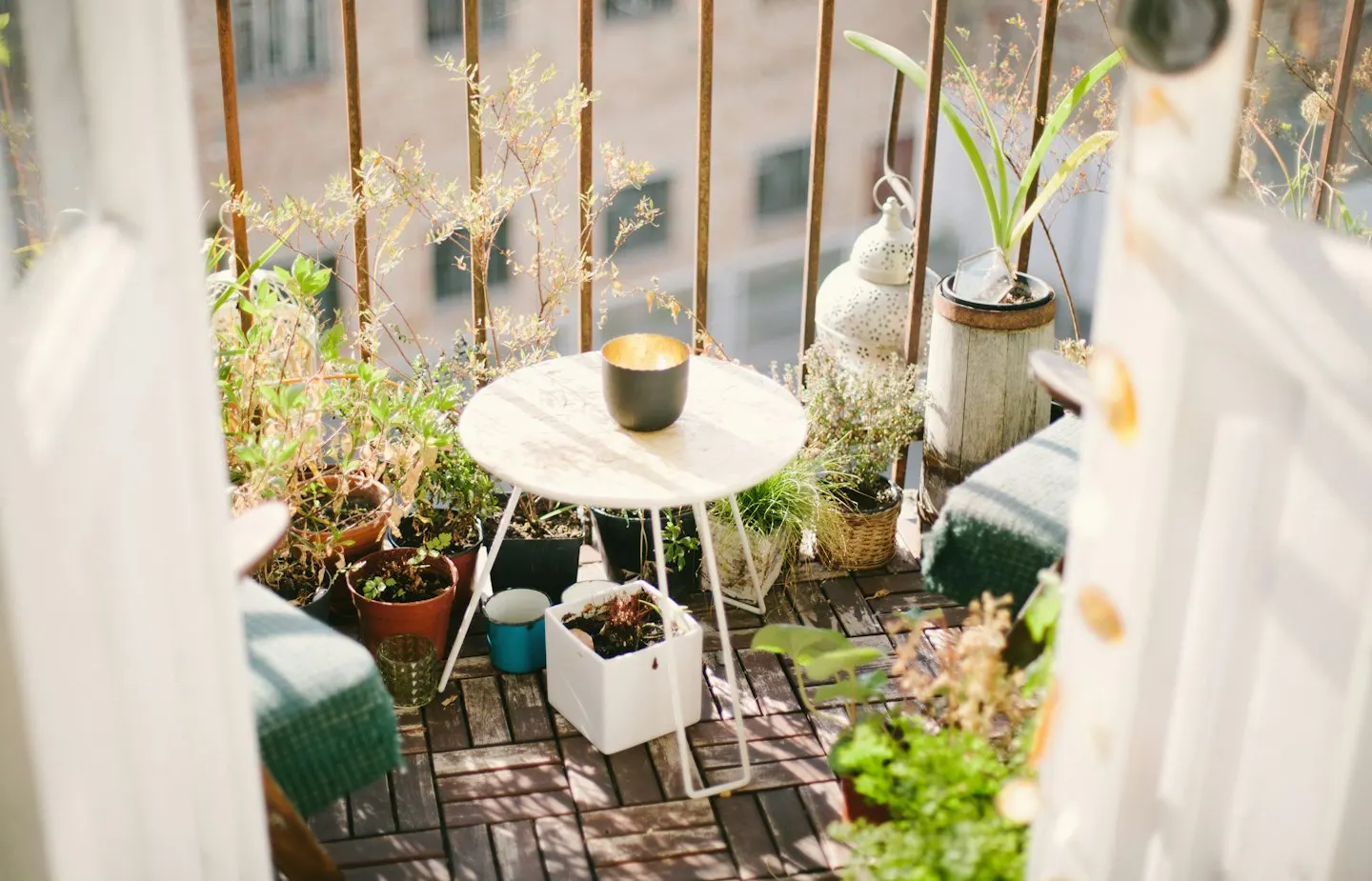
Shelter one corner. A section of reed screen, a slatted panel, or a tall planted pot acting as a windbreak turns one corner into somewhere you can sit in October. Fix screening to the inside of the railing and check what your lease allows before drilling anything at all.
Weight everything down. A pot that is fine in June will be across the balcony in a November gale. Put gravel in the base of light plastic pots, and keep nothing tall and light-weight near the edge.
Avoid anything that acts as a sail. Large flat panels and parasols are the items that actually cause damage. If you want shade, a smaller, lower, well-weighted option is the safer choice.
The permanent layer: structure that survives January
Three or four plants that look alive in winter are what stop the balcony becoming a storage ledge.
- Box, in a decent pot. Slow, tolerant and architectural, and it takes clipping into whatever shape suits.
- Dwarf pine or a small conifer. Holds colour through the worst of the weather, and takes fairy lights in December without complaint.
- Ivy or euonymus trained along the railing, which softens the metal line year-round.
- An ornamental grass. The one plant that genuinely looks better dead than alive — leave it standing through winter for the movement.
Use the largest pots the balcony can structurally take. Small pots freeze solid, dry out fast, and blow over. Frost-proof is worth paying for: terracotta that is not rated for it will crack and shed its face in the first hard freeze.
Railing planters, and which side they go on
The default advice is to hang planters over the railing facing outwards. Do not do that unless your building explicitly permits it.
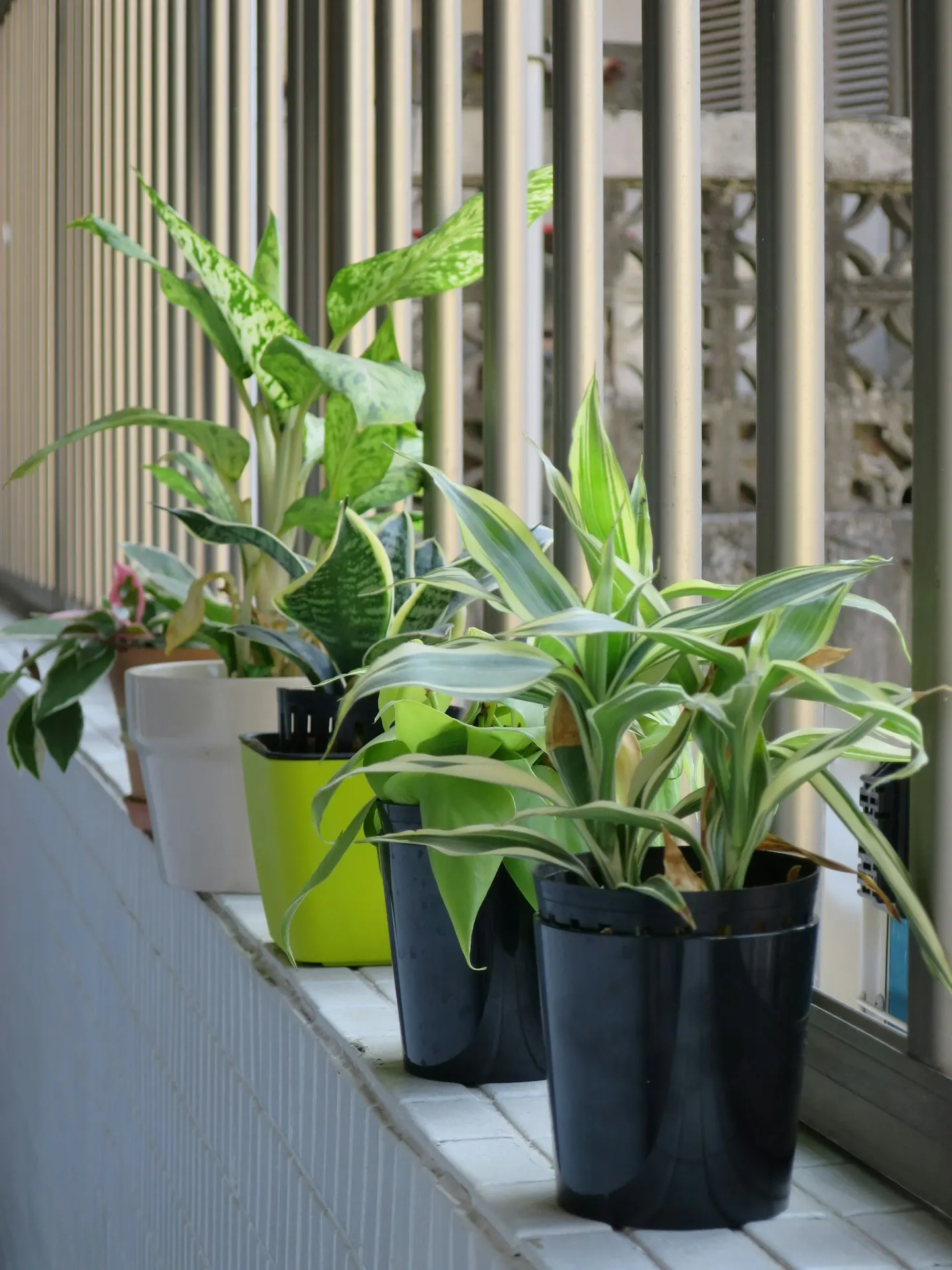
A planter on the outside is a falling object above a public footpath, and most leases prohibit it for that reason. Hung on the inside, it is as attractive from your chair, it is sheltered from the worst of the wind, and nothing lands on anyone below. Use brackets rated well beyond the soaked weight of the pot, since wet compost is far heavier than dry.
Lighting, which is what makes it usable after dark
This is what turns a balcony from a summer space into a year-round one, and it is where most people buy the wrong thing.
Buy outdoor-rated. Look for IP44 as a minimum on the box. Indoor string lights sold for bedrooms will last roughly one wet month outdoors and then fail, usually in a way that trips something.
Solar works, with a caveat. The panel needs several hours of genuine direct sun to charge, which a north-facing balcony will not give it between November and February. Battery or mains is more reliable there.
Keep it low and warm. Lights at railing height or below, in a warm tone, read as inviting. A single bright fitting overhead reads as a fire escape.
The seasonal layer, which is the only part that changes
With the structure in place, each season needs very little.
Autumn. Swap summer annuals for ornamental cabbage, heather or small chrysanthemums. Add a weatherproof outdoor cushion and a wool blanket kept just inside the door. This is the season the balcony is most usable and least used.
Winter. Push evergreen pots together into one group, wind lights through the tallest, and add a lantern with a battery candle. Grouping pots is not only decorative — it protects the roots at the centre of the group from freezing. The same restraint that works on an outdoor Christmas display applies here: one idea done properly beats five done thinly.
Spring. Bulbs planted in autumn come through first. Forced blossom branches in a weighted pot give height before anything else has leaves, which pairs with the approach in the spring guide.
Summer. Add the flowers and the folding chair, and accept that this is the easy quarter.
Seating that earns the space
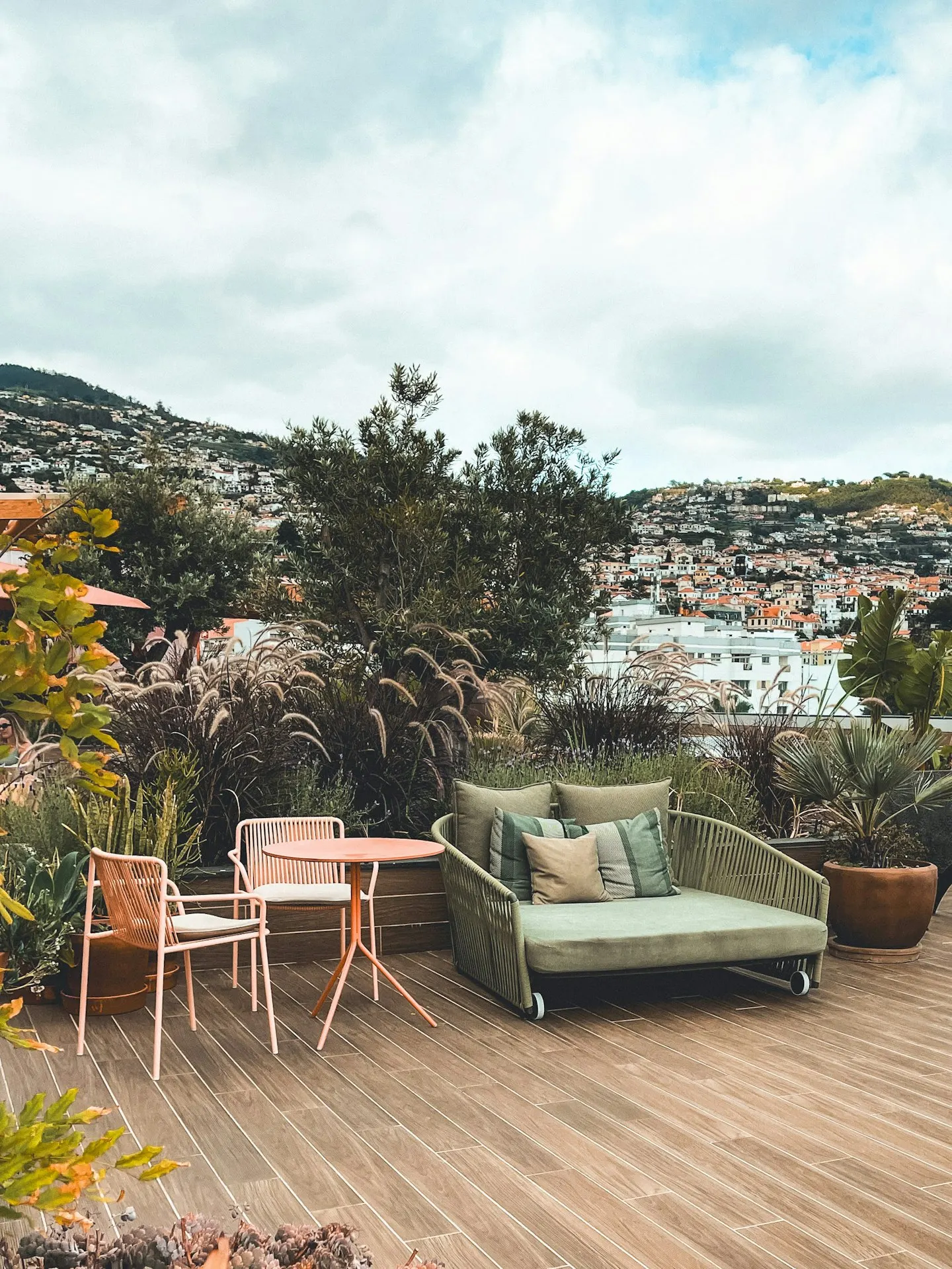
On a balcony under about 1.2m deep, fixed seating will not work and a folding chair will. Measure the depth before buying anything: you need the chair’s depth plus roughly 40cm to stand up and get past it.
A narrow shelf along the railing at about 20cm deep, for a cup and a book, is often more useful than a table, and it does not occupy floor area. Where a table is possible, a folding bistro table at around 50 to 60cm across is usually the largest that still allows a chair to pull out properly.
If the balcony is reached through the main entrance rather than a living room, the surface just inside it takes the wet boots and the post, and that is covered in the entry table guide. The three-stage approach used on an autumn porch works here too, since both are outdoor spaces that have to survive the same weather.
Still wondering
Common questions
Can I hang planters on the outside of the railing?
Not unless your building explicitly permits it. A planter on the outside is a falling object above a public footpath, and most leases prohibit it for that reason. Hung on the inside it looks just as good from your chair and is sheltered from the worst wind.
Why do my balcony plants keep dying?
Usually wind rather than cold. Wind accelerates around a building and dries pots out quickly, and the higher the floor the worse it gets. Shelter one corner, use the largest pots the balcony can take, and weight anything light.
Do solar lights work on a balcony?
Only where the panel gets several hours of genuine direct sun. A north-facing balcony will not provide that between November and February, so battery or mains lighting is far more reliable there.
Save it
Pin this for your board
Tap the image to save it to Pinterest and come back to it when you are ready to start.